

Biorefinery Market Size, Share & Trends Analysis Report by 2026-2035
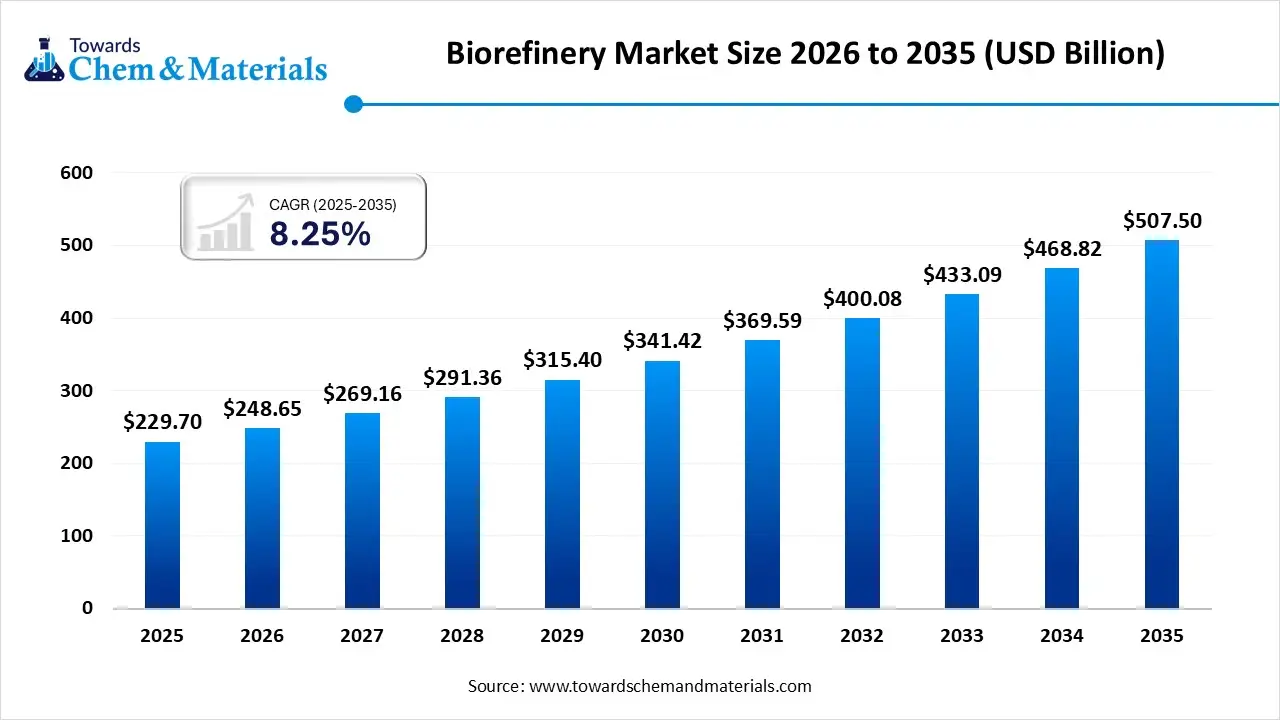
According to Towards Chemical and Materials, the global biorefinery market size is valued at USD 248.65 billion in 2026 and is expected to hit around USD 507.50 billion by 2035, exhibiting at a compound annual growth rate (CAGR) of 8.25% over the forecast period from 2026 to 2035. A study published by Towards Chemical and Materials a sister firm of Precedence Research.
Ottawa, Feb. 25, 2026 (GLOBE NEWSWIRE) -- The global biorefinery market size was estimated at USD 229.70 billion in 2025 and is expected to increase from USD 248.65 billion in 2026 to USD 507.50 billion by 2035, growing at a CAGR of 8.25% from 2026 to 2035. Asia Pacific dominated the biorefinery market with the largest revenue share of 43% in 2025. The heavy shift towards sustainability and eco-friendliness has fueled the industry's potential in recent years. A place or facility that can convert biological material into useful products such as power, chemicals, fuels, and material called a biorefinery. Moreover, by using biomass instead of crude oil, the biorefinery has helped reduce dependence on fossil fuels while lowering carbon emissions in recent years.
Download a Sample Report Here@ https://www.towardschemandmaterials.com/download-sample/5718
Biorefineries: Cleaner Energy from Biomass
Biorefinery Market Report Highlights
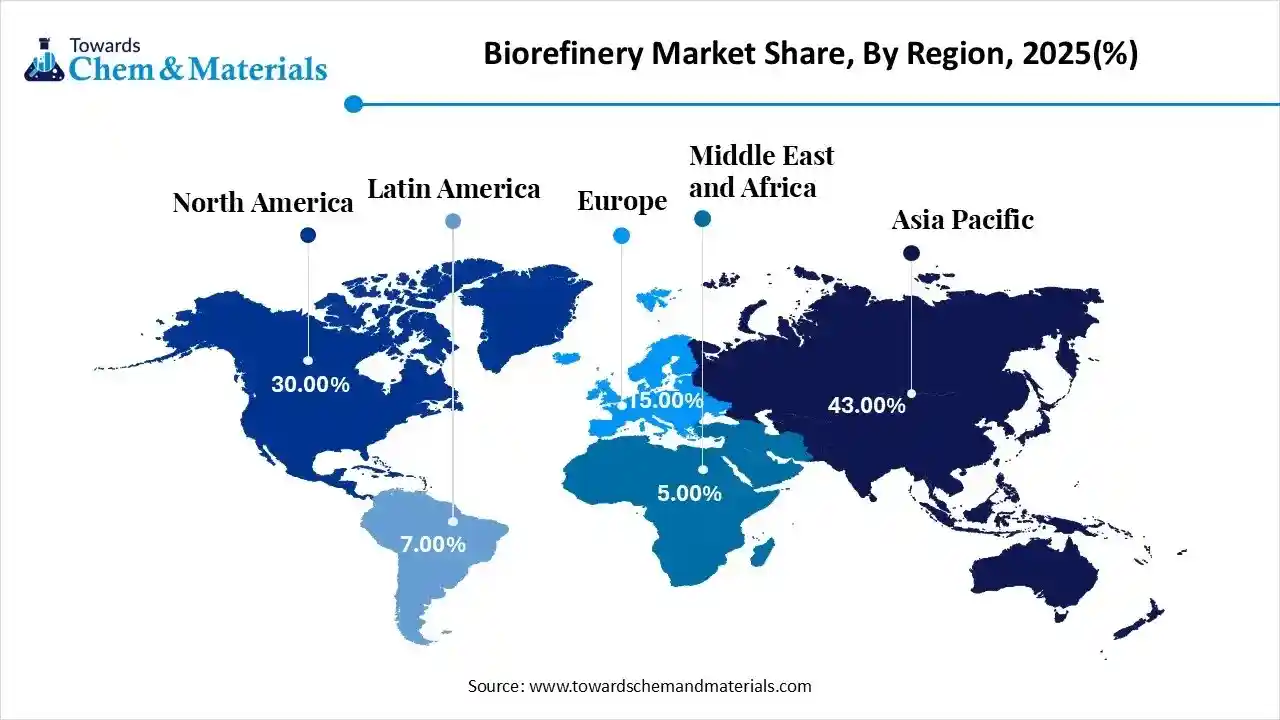
- Asia-Pacific dominated the global biorefinery industry with the largest revenue share of 43% in 2025.
- By feedstock type, the lignocellulosic biomass segment led the market with the largest revenue share of 42% in 2025.
- By technology, the biochemical conversion segment dominated the market with a revenue share of 45% in 2025.
- By product type, the Biofuels segment led the market with the largest revenue share of 35% in 2025.
- By end use industry, the transportation segment dominated the market with a revenue share of 47% in 2025.
- By refinery type, the second-generation biorefineries segment led the market with the largest revenue share of 46% in 2025.
Understanding Biofuels: The Key Products of Biorefineries
Biofuels are a group of fuels made from biomass—organic materials that can be processed into energy. These fuels can come in solid, liquid, or gaseous forms and serve as renewable alternatives to conventional fossil fuels. The most commonly used biofuels today include biodiesel, bioethanol, biogas, hydrogen, and biomass pellets, each offering its own set of benefits and challenges.
1. Biodiesel
Biodiesel is a type of biofuel that is synthesized from oils through a chemical process known as transesterification. It is one of the most popular biofuels globally due to its versatility. Biodiesel can be made from both dedicated oils (such as vegetable oils) and waste oils (like used cooking oil). The European Union (EU) is the largest producer of biodiesel, with a production of around 3.4 million metric tons in 2020.
2. Bioethanol
Bioethanol, or ethanol made from biomass, is another widely used biofuel. It is commonly produced through fermentation processes using various plant materials, such as sugar beets and cereals. Bioethanol can be used in vehicles either on its own or blended with gasoline, requiring minimal engine modifications. The rise in gasoline prices has made bioethanol more competitive. However, while bioethanol production from first-generation sources (like food crops) is reaching its limits, second-generation bioethanol made from cellulosic biomass (non-food crops) is still hindered by high production costs and uncertain policy support, particularly in the EU.
3. Biogas
Biogas is a gaseous biofuel mainly composed of methane, produced through the anaerobic fermentation of organic waste. This fermentation process takes place in the absence of oxygen and results in a mixture of methane and carbon dioxide. Biogas can be used for heating, in boilers, or even injected into the natural gas grid. Its use as a renewable energy source is growing, driven by both the need for waste management and the desire for cleaner energy.
4. Hydrogen
Hydrogen is considered one of the cleanest fuels available because its combustion in a fuel cell produces only water as a byproduct. It is an efficient energy carrier, useful for storing and transferring energy from renewable sources. Hydrogen is typically produced by splitting water molecules (a process called electrolysis), and when renewable energy powers this process, the resulting hydrogen is known as "green hydrogen." Additionally, there are promising developments in producing hydrogen from biomass, especially through processes like lignocellulosic gasification and aqueous phase reforming (APR). These methods show potential for creating hydrogen more sustainably from materials like ethanol, glycerol, or even wood.
5. Biomass Pellets
Biomass pellets are one of the simplest forms of biofuels. These pellets are made by compressing various types of biomass, such as wood, agricultural waste, or forestry residues, into small, dense, and easily transportable forms. They are often used for heating purposes in domestic or industrial settings. Biomass pelletization is gaining popularity due to its cost-effectiveness, ease of storage, and low environmental impact compared to fossil fuels.
The Future of Biofuels and Biorefineries
As the world continues to seek sustainable energy solutions, biofuels are expected to play a key role in reducing greenhouse gas emissions and decreasing reliance on fossil fuels. While biofuels such as biodiesel and bioethanol have seen widespread adoption, the development of second-generation biofuels from non-food biomass sources is an area of ongoing research and investment.
However, several challenges remain, particularly the high costs of producing second-generation biofuels and the need for supportive policy frameworks to drive their growth. Despite these hurdles, the future of biofuels looks promising, with innovations in production technologies and increased global interest in renewable energy sources paving the way for a more sustainable and energy-efficient world.
In conclusion, biofuels such as biodiesel, bioethanol, biogas, hydrogen, and biomass pellets are vital products of biorefineries, contributing to cleaner energy production. With continued innovation and support, these biofuels will be critical in shaping a sustainable energy future.
Private Industry Investments for Biorefinery:
- Neste’s Rotterdam Expansion: The company is investing €2.5 billion to expand its Netherlands facility to become the world’s largest producer of renewable diesel and sustainable aviation fuel by 2026.
- AM Green’s Bio-SAF Project: Following the acquisition of Chempolis Oy, this firm is investing $1 billion over three years to produce sustainable aviation fuel from non-food biomass in India.
- Eni’s Livorno Conversion: The Italian energy giant secured €500 million in financing to transform its traditional Livorno crude oil refinery into a dedicated biofuels plant.
- Nexgen Energia Growth Equity: In 2025, this Indian firm raised a $1 billion growth equity round to scale up the industrial production of compressed biogas and other biofuels.
-
SkyNRG Late-Stage Funding: This Netherlands-based company raised $282 million in 2025 to accelerate the development of regional biorefineries dedicated to sustainable aviation fuel supply chains.
What are the Major Trends in the Biorefinery Market?
- Conversion of Single Products into Multiple Products: The conversion of single products into multiple products through a biorefinery is positively impacting revenue potential and industry scalability in recent years.
- Usage of Food Waste and Agricultural Waste: Increasing usage of food waste and agricultural waste has driven investor confidence in the industry's future nowadays, as the biorefinery makes food leftovers, crop residues, and organic waste valuable feedstocks in recent years.
- Integration with the Existing Industrial Infrastructure: The sudden integration with the existing industrial infrastructure has supported the capital growth and economic activity in the sector. Moreover, the manufacturers are actively seen in integrating biorefinery in the existing infrastructure of sugar mills, pulp mills, and ethanol plants.
Immediate Delivery Available | Buy This Premium Research Report (Global Deep Dive
USD 3200) @ https://www.towardschemandmaterials.com/checkout/5718
For more information, visit the Towards Chemical and Materials website or email the team at sales@towardschemandmaterials.com| +1 804 441 9344
Global Agroforestry Market Report Scope
| Report Attribute | Details |
| Market size value in 2026 | USD 248.65 Billion |
| Revenue forecast in 2035 | USD 507.50 Billion |
| Growth rate | CAGR of 8.25% from 2026 to 2035 |
| Base year for estimation | 2025 |
| Historical data | 2019 - 2026 |
| Forecast period | 2026 - 2035 |
| Quantitative units | Revenue in USD billion, Volume in Kilotons, and CAGR from 2026 to 2035 |
| Report coverage | Revenue forecast, company ranking, competitive landscape, growth factors, and trends |
| Segments covered | By Feedstock Type, By Technology Pathway, By Product Type, By End-use Industry, By Refinery Type, By Region |
| Regional scope | North America; Europe; Asia Pacific; Latin America; Middle East & Africa |
| Country scope | U.S.; Canada; Mexico; Brazil; Argentina; Germany; UK; Italy; Spain; France; China; Japan; South Korea; Saudi Arabia; South Africa |
| Key companies profiled | Weyerhaeuser Company; ArborGen LLC; EcoPlanet Bamboo; Green Resources AS; Stora Enso; Suzano S.A.; West Fraser Timber Co. Ltd.; Gratitude Farms; Natba Greene; Mul Biotech Farms |
Biorefinery Market Dynamics
Driver
Renewable Targets Drive Biorefinery Growth
The emergence and implementation of stricter climate policies and renewable energy targets have generated value-added opportunities for industry participants in recent years. Moreover, the global governments have been seen trying to reduce fossil fuel usage and carbon emissions, where biorefinery has been observed in providing lower carbon fuels with biobased chemicals.
Restraint
Investments Barriers Challenges Industry Expansion
High initial investment cost is likely to hamper the industry's growth in the coming years. Moreover, setting up a biorefinery requires advanced technology and infrastructure. Feedstock handling, processing units, and integration increase expenses. Small companies struggle with funding. Technology risks also discourage investors. Operating costs can be high in early stages. Lack of skilled workforce adds challenges.
Market Opportunity
What is the Most Significant Opportunity for the Biorefinery Industry?
The local production of energy and chemicals is expected to create lucrative opportunities in the coming years. Moreover, countries want energy security and reduced imports. Biorefineries can use local biomass to produce fuel and materials. Rural areas benefit from jobs and income. Local supply chains reduce transportation costs. This opportunity supports regional development. Governments prefer decentralized production models.
Enzyme Innovation Fuels Long-Term Expansion
The use of advanced biochemical and enzyme-based processes is expected to support the long-term expansion of manufacturing operations. Moreover, the new enzymes improve conversion efficiency and reduce waste. Processes are becoming more selective and energy efficient. This lowers operating costs and improves yield. Advanced fermentation and catalytic methods support diverse products. Digital monitoring improves process control.
Immediate Delivery Available | Buy This Premium Research Report@ https://www.towardschemandmaterials.com/checkout/5718
Biorefinery Market Segmentation Insights
Feedstock Insights
The lignocellulosic biomass segment dominates the biorefinery market, owing to it is widely available and low cost. It comes from agricultural residues, wood waste, and crop byproducts. It does not compete with the food supply. Governments support its use for sustainability reasons. Large volumes ensure a steady feedstock supply. It is suitable for producing biofuels, chemicals, and power.
Biorefinery Market Share, By Feedstock Type , 2025(%)
| Feedstock Type | Revenue Share, 2025 (%) | |
| Lignocellulosic Biomass | 42.00 | % |
| Sugar & Starch Crops | 7.00 | % |
| Oil Crops | 15.00 | % |
| Organic Waste | 11.00 | % |
| Aquatic Biomass | 20.00 | % |
| Microalgae | 5.00 | % |
The aquatic biomass segment is experiencing the fastest growth in the market during the projected period, because it grows fast and does not need farmland. Algae and aquatic plants can be produced year-round. They offer high yield per area. Aquatic biomass absorbs carbon dioxide efficiently. It can be grown using wastewater, reducing pollution. This feedstock supports biofuels, chemicals, and bioplastics. As land becomes limited, aquatic biomass becomes more attractive.
Technology Pathway Insights
The biochemical conversion segment dominates the biorefinery market because it is well-established and efficient. It uses enzymes and microorganisms to convert biomass into fuels and chemicals. This method works well with sugars and agricultural waste. It operates at lower temperatures, saving energy. Many existing biorefineries use fermentation-based processes. It produces bioethanol and biochemicals reliably.
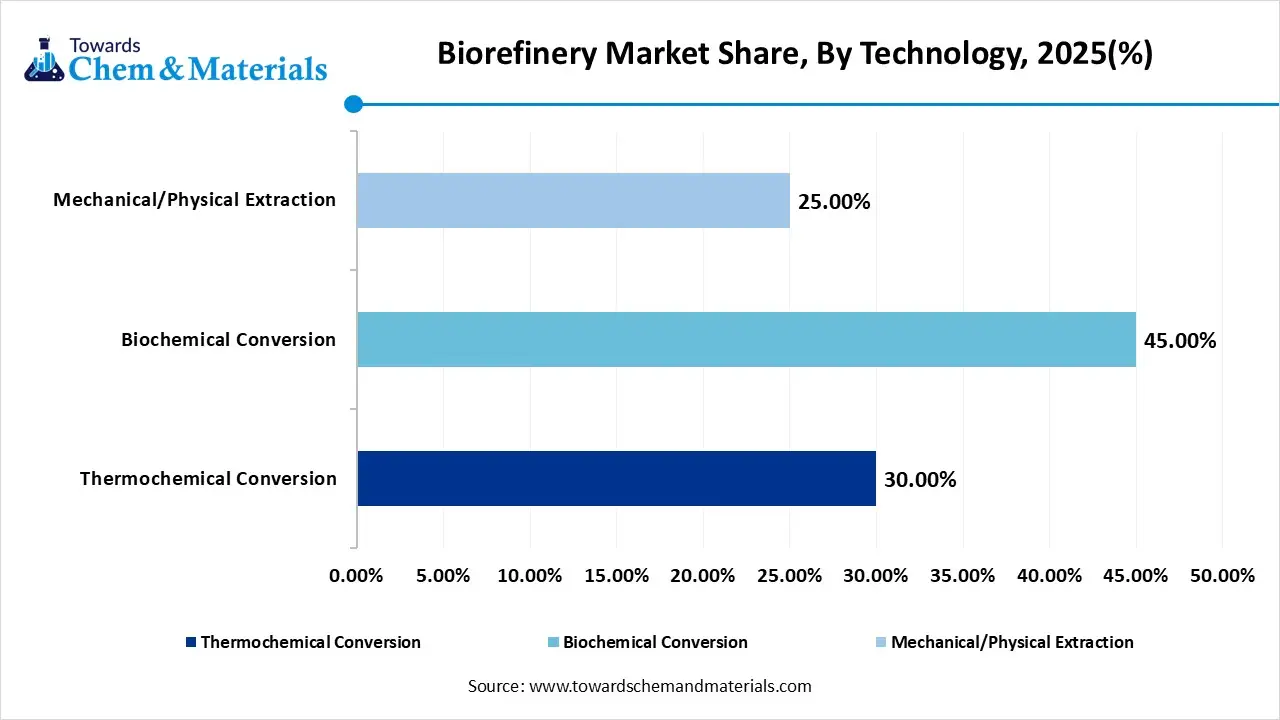
The thermochemical segment is anticipated to grow fastest during the projected period, owing to it handles diverse feedstocks. It converts solid, wet, and mixed biomass efficiently. This technology produces fuels, chemicals, and power. It works faster than biochemical methods. It is suitable for large-scale production. Waste materials can be used easily. Advanced gasification and pyrolysis improve efficiency.
Biorefinery Market Share, By Technology , 2025(%)
| By Technology | Revenue Share, 2025 (%) | |
| Thermochemical Conversion | 30.00 | % |
| Biochemical Conversion | 45.00 | % |
| Mechanical/Physical Extraction | 25.00 | % |
Product Type Insights
The bioethanol segment dominates the biorefinery market, owing to it is widely used as a fuel blend. Governments mandate ethanol blending to reduce emissions. Existing fuel infrastructure supports bioethanol use. It is easy to produce from biomass. Transportation fuel demand is high. Bioethanol reduces dependence on fossil fuels. It has established markets and supply chains.
Biorefinery Market Share, By Product Type , 2025(%)
| By Product Type | Revenue Share, 2025 (%) | |
| Biofuels | 35.00 | % |
| Biochemicals | 21.00 | % |
| Solvents | 15.00 | % |
| Bioelectricity | 11.00 | % |
| Solvents | 8.00 | % |
| Natural Fibers | 6.00 | % |
| District Heating | 4.00 | % |
The sustainable aviation fuel segment is experiencing the fastest growth in the market during the projected period, due to airline emission targets. Aviation has found alternatives to liquid fuels. Governments and airlines commit to carbon reduction. SAF reduces emissions significantly. Air travel demand continues to grow.
End Use Type Insights
The transportation segment dominates the biorefinery market because fuel demand is very high. Vehicles consume large volumes of energy daily. Biofuels replace gasoline and diesel partially. Governments promote cleaner transport fuels. Existing engines support blended fuels. Transportation creates steady and predictable demand. Fuel blending mandates support market growth.
Biorefinery Market Share, By End-use Industry, 2025(%)
| By End-use Industry | Revenue Share, 2025 (%) | |
| Transportation (Road, Aviation, Marine) | 47.00 | % |
| Chemical Industry | 20.00 | % |
| Power Generation | 10.00 | % |
| Agriculture | 7.00 | % |
| Packaging | 5.00 | % |
| Textiles | 4.00 | % |
| Pharmaceuticals & Personal Care | 3.00 | % |
| Construction & Building Materials | 4.00 | % |
The packaging segment is expected to grow fastest during the projected period, owing to sustainability pressure. Brands want biodegradable and bio-based materials. Plastic waste regulations are increasing. Biorefineries produce bioplastics and biobased packaging materials. E-commerce growth increases packaging demand. Consumers prefer eco-friendly packaging. Governments restrict single-use plastics.
Refinery Type Insights
The second-generation biorefineries segment dominates the biorefinery market, owing to their use of non-food biomass. They reduced competition concerns. Technology is more mature than the advanced generations. They use agricultural waste and residues. Governments supported their development. They produce biofuels and chemicals efficiently. Investment risk is lower compared to newer technologies.
Biorefinery Market Share, By Refinery Type, 2025(%)
| By Refinery Type | Revenue Share, 2025 (%) | |
| First-Generation Biorefineries (food-based) | 22.00 | % |
| Second-Generation Biorefineries (non-food biomass) | 46.00 | % |
| Third-Generation Biorefineries (algae and aquatic sources) | 15.00 | % |
| Integrated Biorefineries (multi-feedstock, multi-product) | 17.00 | % |
The third-generation biorefineries segment is experiencing the fastest growth in the market during the projected period, because they use algae and advanced biomass. These feedstocks offer a higher yield. They do not require farming. They support fuel, chemical, and material production. Carbon capture benefits are high. Technology improvements reduce costs. Governments support innovation. As sustainability and efficiency become critical, third-generation biorefineries will lead to future growth.
Regional Insights
The Asia Pacific biorefinery market size was valued at USD 98.77 billion in 2025 and is expected to be worth around USD 220.76 billion by 2035, exhibiting at a compound annual growth rate (CAGR) of 8.27% over the forecast period from 2026 to 2035. Asia-Pacific dominated the global biorefinery industry with the largest revenue share of 43% in 2025.

How did Europe hold the Largest Share of the Biorefinery Market?
The Europe region leads the global market due to strong government support and strict climate policies. European countries focus heavily on reducing carbon emissions and fossil fuel use. The region invested early in biofuels, bio-based chemicals, and waste-to-energy projects. Strong research institutions and funding programs supported Innovation. Europe also has advanced agriculture and forestry sectors, providing a steady biomass supply.
Biorefinery Market Share, By Region, 2025(%)
| By Region | Revenue Share, 2025 (%) | |
| North America | 30.00 | % |
| Europe | 15.00 | % |
| Asia Pacific | 43.00 | % |
| Latin America | 7.00 | % |
| Middle East & Africa | 5.00 | % |
Germany Biorefinery Market Trends
Germany’s market is growing as demand increases for sustainable, bio-based alternatives to fossil-derived chemicals and fuels. Strong government support through renewable energy targets and circular economy policies is driving investment in biorefinery infrastructure and technology development.
Why is the Biorefinery Industry Growing Rapidly in North America?
The Asia Pacific region is the fastest-growing region, akin to rapid industrial growth and huge biomass availability. The region produces large amounts of agricultural and food waste. Population growth increases energy and material demand. Governments are promoting renewable energy to reduce imports. Production costs are lower, making large-scale biorefineries attractive. Countries are investing in biofuels, chemicals, and waste-based energy.
China Biorefinery Market Trends
China’s market is expanding rapidly as the country emphasizes sustainable development and aims to reduce dependence on fossil fuels through bio-based chemicals, fuels, and materials. Strong government support, including renewable energy policies and carbon reduction targets, is driving investment in biorefinery projects and infrastructure.
Top Companies in the Biorefinery market & Their Offerings:
Tier 1:
- Neste Corporation: Produces renewable diesel and sustainable aviation fuel (SAF) using proprietary waste-to-fuel technology.
- Abengoa Bioenergy: Focuses on producing bioethanol and renewable electricity from cereal crops and cellulosic biomass.
- Clariant AG: Develops specialty catalysts and the Sunliquid process to convert agricultural residues into cellulosic ethanol.
- POET LLC: Operates a network of refineries converting corn and biomass into ethanol, animal feed, and corn oil.
- TotalEnergies SE: Processes vegetable oils and waste fats into HVO-type biofuels and renewable feedstocks for plastics.
- ADM: Leverages agricultural processing to produce biodiesel, ethanol, and plant-based industrial chemicals.
- UPM-Kymmene Corporation: Extracts wood-based biofuels and biochemicals, such as renewable glycols and lignin, from forest biomass.
- Renewable Energy Group (Chevron): Converts fats, oils, and greases into high-quality biodiesel and renewable diesel.
-
Gevo Inc.: Utilizes carbohydrate feedstocks to create low-carbon isobutanol, sustainable aviation fuel, and renewable gasoline.
More Insights in Towards Chemical and Materials:
- Biofuels Market Size | Companies Analysis 2025- 2035
- Agricultural Biologicals Market Size | Companies Analysis 2026- 2035
- Biopolymer Coatings Market Size | Companies Analysis 2025- 2035
- Biohydrogen Market Size | Companies Analysis 2025- 2035
- U.S. Biofuels Market Size | Companies Analysis 2025- 2035
- Advanced Biofuels Market Size | Companies Analysis 2025- 2035
- Biofertilizer Market Size | Companies Analysis 2025- 2035
- Cellulose Nanocrystal Reinforced Biopolymers Market Manufacturers & Suppliers Company Analysis 2026-2035
- Polypyrrole Bioelectronics Market Manufacturers & Suppliers Company Analysis 2026-2035
- Biodegradable Electronics Polymers Market Manufacturers & Suppliers Company Analysis 2026-2035
- Biolubricants Market Manufacturers & Suppliers Company Analysis 2026-2035
- Bio-polyols Market Manufacturers & Suppliers Company Analysis 2026-2035
- Bioplastic Textiles Market Size | Companies Analysis 2026- 2035
- Bioplastic Compounding Market Size | Companies Analysis 2026- 2035
- Bioethanol Market Size | Companies Analysis 2026- 2035
- Biogas Market Size | Companies Analysis 2026- 2035
- Bioplastics in Diagnostic Devices Market Size | Companies Analysis 2026- 2035
- Bioplastics In Medical Devices Market Size | Companies Analysis 2026- 2035
- Europe Biopolymers Market Size | Companies Analysis 2026- 2035
- U.S. Biopolymers Market Size | Companies Analysis 2026- 2035
- Europe Biodegradable Plastics Market Size | Companies Analysis 2026- 2035
- U.S. Bioplastics Market Size | Companies Analysis 2026- 2035
- Europe Bioplastics and Biopolymers Market Size | Companies Analysis 2026- 2035
- U.S. Bioplastics and Biopolymers Market Size | Companies Analysis 2026- 2035
-
Asia Pacific Biopolymers Market Size | Companies Analysis 2026- 2035
Biorefinery Market Top Key Companies:
- UPM Global
- Valero
- Versalis SpA.
- IES BIOGAS srl
- Neste
- Ørsted A/S
- Renewable Energy Group
- Sekab, Green Plains Inc.
- TotalEnergies
- Vivergo Fuels
- AB HOLDING SPA
- Assam Biorefinery Private Limited.
- Borregard AS
- BP PLC
- BTS Biogas Srl/GmbH
- Chempolis
- Clariant
- Cargill Incorporated
- Godavari Biorefineries Ltd.
- Honeywell International Inc.
- Wilmar International Ltd.
- Zea2 Bioworks
What is Going Around the Globe in the Biorefinery Industry
-
In February 2026, the altM established an integrated biorefinery pilot plant. Also, the motive behind this heavy installation is to advance post-petrochemical material, as per the company's claim.
Biorefinery Market Report Segmentation
This report forecasts revenue growth at global, regional, and country levels and provides an analysis of the latest industry trends in each of the sub-segments from 2019 to 2035. For this study, Towards Chemical and Materials has segmented the global Powder Coatings Market
By Feedstock Type
- Lignocellulosic Biomass
- Wood
- Straw
- Corn stover
- Bagasse
- Sugar & Starch Crops
- Sugarcane
- Corn
- Wheat
- Oil Crops
- Soybean
- Rapeseed
- Palm
- Algae
- Organic Waste
- MSW
- Industrial Waste
- Food Waste
- Aquatic Biomass
- Seaweed
- Microalgae
By Technology Pathway
- Thermochemical Conversion
- Pyrolysis
- Gasification
- Hydrothermal Liquefaction
- Biochemical Conversion
- Fermentation
- Anaerobic Digestion
- Enzymatic Hydrolysis
- Mechanical/Physical Extraction
- Pressing
- Drying
- Milling
By Product Type
- Biofuels
- Bioethanol
- Biodiesel
- Biogas
- Sustainable Aviation Fuel (SAF)
- Bio-oil
- Biochemicals
- Platform Chemicals
- Succinic Acid
- Lactic Acid
- Others (Furfural, etc.)
- Specialty Chemicals
- Surfactants
- Solvents
- Biopolymers
- Biomaterials
- Bioplastics
- Bio-composites
- Natural Fibers
- Cellulosic Fibers
- Lignin-Based Fibers
- Plant/Vegetal Fibers
- Agricultural Residue Fibers
- Power & Heat
- Biomass Power
- Bio-Steam
- Bio-Thermal
- Combined Heat & Power
- Bioelectricity
- Biogas-to-Electricity
- Biomass Steam Turbines
- Gasification-based Electricity
- Waste-to-Energy Electricity
- District Heating
- Biomass District Heating
- Bio-CHP District Heating
- Thermal Networks
By End-use Industry
- Transportation (Road, Aviation, Marine)
- Chemical Industry
- Power Generation
- Agriculture
- Packaging
- Textiles
- Pharmaceuticals & Personal Care
- Construction & Building Materials
By Refinery Type
- First-Generation Biorefineries (food-based)
- Second-Generation Biorefineries (non-food biomass)
- Third-Generation Biorefineries (algae and aquatic sources)
- Integrated Biorefineries (multi-feedstock, multi-product)
By Regional
- North America
- Europe
- Asia Pacific
- Latin America
- Middle East & Africa
Immediate Delivery Available | Buy This Premium Research Report@ https://www.towardschemandmaterials.com/checkout/5718
About Us
Towards Chemical and Materials is a leading global consulting firm specializing in providing comprehensive and strategic research solutions across the chemical and materials industries. With a highly skilled and experienced consultant team, we offer a wide range of services designed to empower businesses with valuable insights and actionable recommendations.
Our Trusted Data Partners
Towards chem and Material | Precedence Research | Statifacts | Towards Packaging | Towards Healthcare | Towards Food and Beverages | Towards Automotive | | Nova One Advisor | Nutraceuticals Func Foods | Onco Quant | Sustainability Quant | Specialty Chemicals Analytics | TCM Blog
For Latest Update Follow Us: https://www.linkedin.com/company/towards-chem-and-materials/
USA: +1 804 441 9344
APAC: +61 485 981 310 or +91 87933 22019
Europe: +44 7383 092 044
Email: sales@towardschemandmaterials.com
Web: https://www.towardschemandmaterials.com/


Legal Disclaimer:
EIN Presswire provides this news content "as is" without warranty of any kind. We do not accept any responsibility or liability for the accuracy, content, images, videos, licenses, completeness, legality, or reliability of the information contained in this article. If you have any complaints or copyright issues related to this article, kindly contact the author above.
